Daily Scrum 03 — refinement outcomes
Historical Sprint 1 evidence
This page preserves a reconstructed Sprint 1 coordination record. It is not a current status report; see the Scrum records overview for its evidence and inference boundaries.
| Field | Record |
|---|---|
| Reconstructed date | 13 August 2026 |
| Reporting window | 11–13 August 2026 |
| Sprint focus | Convert refinement decisions into public documentation, stable contracts, and dependency-aware delivery work |
| Evidence | Gitea refinement history and commits for responsive review, PostGIS recovery, Docusaurus, branding, Mapbox, and challenge APIs |
This is an evidence-based reconstruction of activity during the reporting window. It is not a verbatim transcript and does not invent attendance, estimates, or quotations that were not retained.
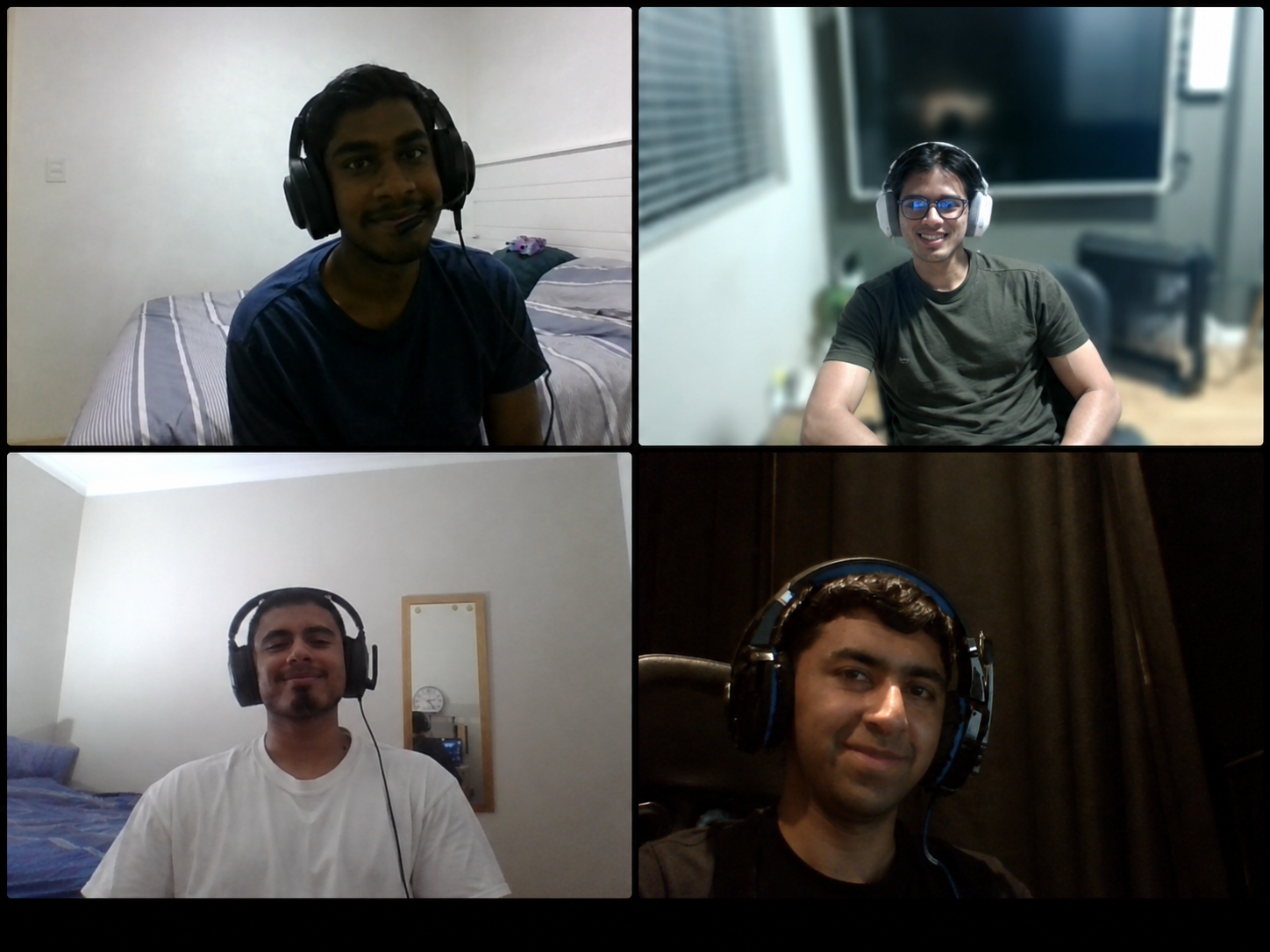
Progress since the previous check-in
| Workstream | Evidence-backed update |
|---|---|
| Product/Web | Kevin documented the field-test protocol, reviewed responsive and accessible states, clarified Basic-tier product decisions, established the visual identity, compared map providers, and began the Mapbox Standard migration. |
| API/security | Tyron completed and documented the challenge-attempt API contract so the browser could submit intent without marking challenges or awarding rewards locally. |
| Data | Uzair documented PostGIS recovery, designed challenge and reward persistence, and synchronised the expanded issue plan with ownership and dependency information. |
| Quality/delivery | Caleb established the Docusaurus site and Cloudflare Pages automation so architecture, API, testing, deployment, and process evidence could be published without requiring an account. |
Coordination points
- The map-provider migration could change presentation and SDK integration, but not the API's authority over eligibility.
- The challenge-attempt contract needed to protect marking data, server deadlines, scores, rewards, and replay behaviour before UI implementation.
- Docusaurus provided the public documentation surface required for release evidence.
- The expanded backlog needed dependency order across persistence, API, Web, testing, and deployment rather than parallel implementation of disconnected screens.
Impediments and uncertainty
- The refined Basic-tier workload was too large to treat as one undifferentiated sprint item.
- Location field testing, accessible-device checks, and production operator evidence remained manual gates.
- Account lifecycle, reward idempotency, card/deck rules, and battle rules required explicit server-side decisions before their dependent UI could be considered complete.
Plan before the next check-in
- Implement identity and account-lifecycle foundations before dependent player data.
- Land challenge, reward, collection, deck, and battle migrations before their corresponding services and interfaces.
- Follow the refined dependency order and keep protected game rules on the server.
- Keep CI, public documentation, and release validation moving alongside the feature increment.
AI declaration
This retrospective daily summary was generated with assistance from Codex[GPT-5] using repository history. It is not a verbatim meeting minute. The historical-status notice was added with assistance from Codex-CLI[GPT-5].