Daily Scrum 04 — Basic-tier integration
This page preserves a reconstructed Sprint 1 coordination record. It is not a current status report; see the Scrum records overview for its evidence and inference boundaries.
| Field | Record |
|---|---|
| Reconstructed date | 17 August 2026 |
| Reporting window | 14–17 August 2026 |
| Sprint focus | Integrate the Basic-tier player loop while preserving server authority and collecting release evidence |
| Evidence | Commits for challenges, rewards, collections, decks, authoring, CPU battles, account lifecycle, tests, documentation, and CI work |
This summary condenses a high-volume delivery window into a representative coordination record. It is based on repository evidence, not on a retained transcript or invented individual quotations.
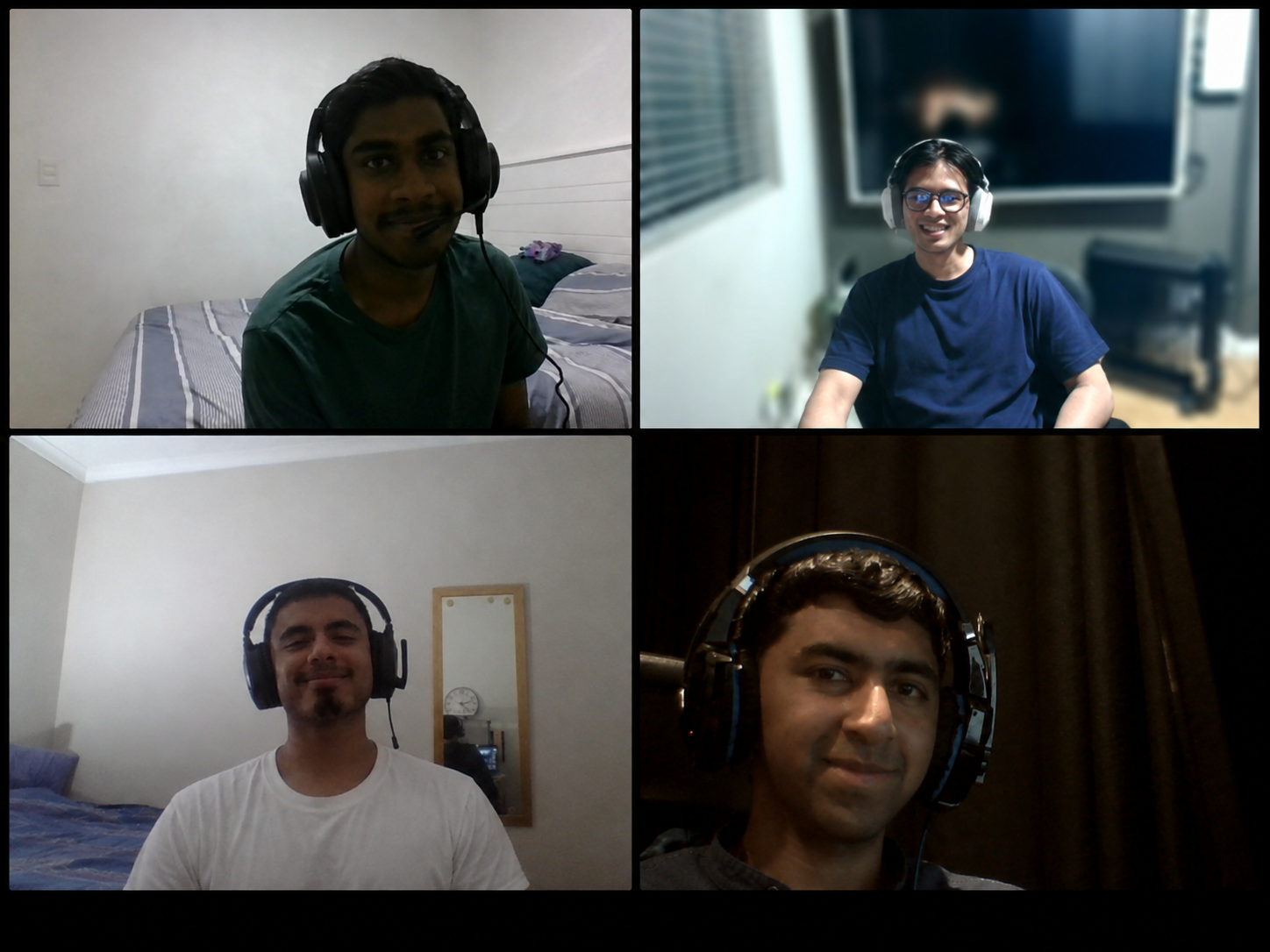
Progress since the previous check-in
| Workstream | Evidence-backed update |
|---|---|
| Product/Web | Kevin implemented the challenge experience, collection and deck interfaces, author console, CPU battle flow and history, then added end-to-end coverage and CI polish for the integrated player journey. |
| API/security | Tyron delivered identity and account deletion, challenge services, collection and deck APIs, and protected author operations while retaining authenticated, server-authoritative contracts. |
| Data | Uzair added challenge and reward migrations, atomic reward handling, the card catalogue, battle rules, CPU battle persistence, and demo seed data needed to exercise the vertical slice. |
| Quality/delivery | Caleb reviewed the public documentation deployment during this window; the broader stream continued to depend on CI stability, deployment configuration, and evidence gathered by the feature owners. |
Increment status
The available history shows the Basic-tier loop moving from separate plans to an integrated increment:
- discover an event and check eligibility;
- start and submit a server-marked challenge;
- receive a persisted, idempotent reward;
- view cards and construct a validated deck;
- run a server-resolved CPU battle and inspect its history; and
- use protected author tools to manage the content behind the journey.
The browser continued to render authoritative state rather than deciding eligibility, challenge results, rewards, deck legality, or battle outcomes.
Release-readiness concerns
- Feature completion still needed one deterministic deployed journey and a consolidated body of release evidence.
- Mobile accessibility, reported-location field behaviour, and representative device checks remained manual gates.
- Production database operations, privacy/security boundaries, backup/recovery, and operator instructions needed explicit review.
- Transient CI or deployment failures had to be distinguished from product defects and documented rather than bypassed.
- Known limitations and incomplete advanced-tier behaviour needed to remain visible in the public documentation.
Plan after the check-in
- Exercise the complete Basic-tier journey deterministically in the deployed environment.
- Verify authentication, CORS, privacy, database, and server-authority boundaries at release scope.
- Finish accessibility and representative-device evidence.
- Consolidate release, testing, deployment, recovery, and known-limitation documentation for the handover.
AI declaration
This retrospective daily summary was generated with assistance from Codex[GPT-5] using repository history. It is not a verbatim meeting minute. The historical-status notice was added with assistance from Codex-CLI[GPT-5].