Sprint 3 report
Repository-backed report for 16–28 September 2026, using main at c0fd42b.
The records are planning and coordination snapshots, a release-readiness view,
and retrospective recommendations. Ceremony dates, attendance, demonstration,
acceptance, and team agreement were not supplied.
Reporting windows describe delivery activity, not proof that meetings occurred. Role labels identify coordination responsibilities, not recorded assignments or attendance. Planned stakeholder reviews remain plans unless outcomes are supplied.
Sprint Planning — 28 September 2026 snapshot
Date: 28 September 2026 snapshot; work window 16–28 September.
Meeting photo
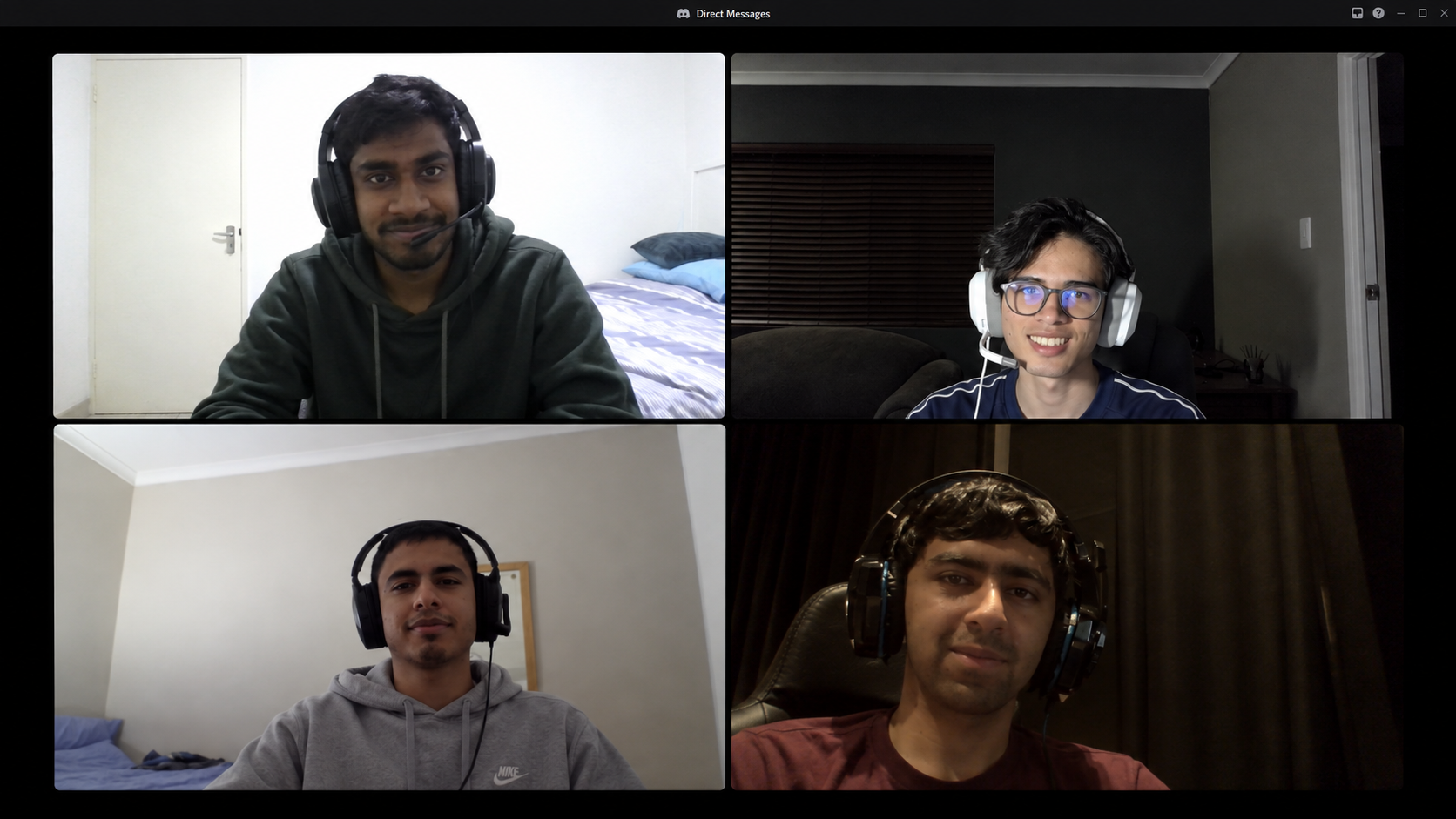
Photo placement follows the supplied order for presentation; its meeting date and association with this record are unconfirmed. See the photo provenance and layout.
Sprint Goal
Extend Wits World's multiplayer and competitive foundation: live PvP, trust review, placement, ranked seasons, territories, card trading, analytics, and developer API. Improve usability, accessibility, performance, and responsive work while separating implementation from release evidence. Randomized territories and Upstash shared limits remain proposed, not delivered.
Discussion Summary
Planning basis
mainatc0fd42bis the comparison point; merges show integration, not production acceptance.- Policy/contract work includes #281, #282, #286, #289, #290, and #292; persistence and runtime/API slices include #283, #285, and #287-#301.
- Player and operator-facing integrations include #317-#329. Individual PRs and current tracker records remain the authority for exact scope and status.
- Stakeholder interactions dated 21, 23, and 25 September are documented as planned in their records; this Scrum snapshot does not claim they occurred.
Progress by stream
- Player experience: merged work covers battle UI (#318), territory UI (#319), ranked UI (#321), trade UI (#324), decks/leaderboard (#325), and responsive polish (#328).
- Backend/security: reviewed merges cover live PvP (#285), trust services (#293), placement (#294), ranked (#295), trade APIs (#301), analytics APIs (#302), developer API (#304), and trust review APIs/runtime (#320, #326).
- Data/integration: merge subjects include live persistence (#283), placement persistence (#287), trust persistence (#288), ranked persistence (#291), territory (#298-#299), and trade persistence (#300).
- Quality/content/delivery: the window also includes accessibility (#306), author workflow (#315, #317), evolution correction (#313), performance (#327), responsive polish (#328), and account purge (#329).
Coordination and dependencies
Policies and contracts provide shared boundaries for persistence, service, and UI work. Follow each PR for actual dependencies. Keep transactions, authority, reconnect/deadline behaviour, public-data filtering, accessibility, and migration compatibility visible across layers.
Impediments and open evidence
- No named deployment, stakeholder acceptance, or manual release validation is established by merge history.
- Feedback needs investigation and retest; related merges are not proof of fix.
- Randomized territories and Upstash shared quotas are not implemented.
- Backlog assignments and ceremony dates/attendance are not inferred.
Key Decisions
- Keep protected state and transactions server-authoritative.
- Keep implementation evidence separate from release acceptance.
- Keep territory randomization and Upstash shared quotas proposed until verified.
These are documented scope boundaries, not a claim of meeting decisions.
Task Allocation
- Product and player experience — Coordination owner: Kevin, frontend; Scope visible in the repository: Battle, ranked, territory, trading, deck/leaderboard, and responsive interfaces
- API and security — Coordination owner: Tyron, backend; Scope visible in the repository: Live gateway, trust, placement, ranked, trade, analytics, and developer API services
- Data and cross-stack integration — Coordination owner: Uzair, database + cross-stack; Scope visible in the repository: Persistence, policy integration, territory/trade state, account purge and cross-layer coordination
- Quality, content, and delivery support — Coordination owner: Caleb; Scope visible in the repository: Review evidence, test/quality follow-up, accessibility and delivery coordination
Role context does not assert issue assignment, individual contribution, or ceremony attendance.
Action Items
- Reconcile deliverables with issue/PR acceptance criteria and live status.
- Record release checks against a named revision and environment.
- Link feedback investigation, accepted work, implementation, and retest.
- Keep territory randomization and distributed limits proposed until verified.
Sources
- Sources: Merge history, repository docs, planned stakeholder records, feedback report
Daily Scrum 1 — 16–19 September 2026 reporting window
Date: 16–19 September 2026 reporting window.
Meeting photo
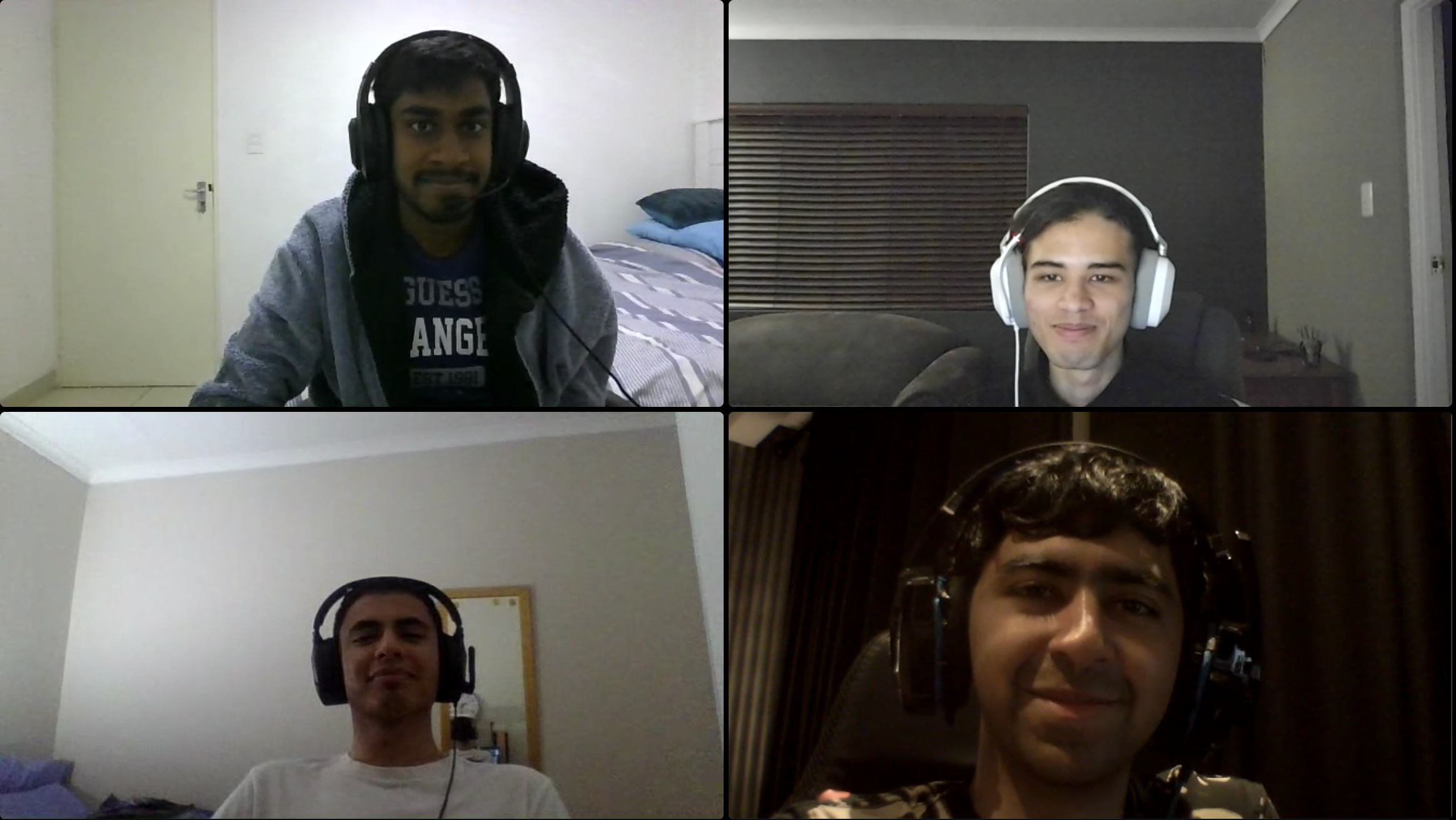
Photo placement follows the supplied order for presentation; its meeting date and association with this record are unconfirmed. See the photo provenance and layout.
Summary of Progress
Progress by stream
- Product/Web (Kevin, coordination role): this window establishes backend and policy contracts for follow-on live, ranked, territory, and trade experiences; merge history here does not attribute UI work to a person.
- API/security (Tyron, coordination role): PR #285 adds the live PvP gateway; #293 implements trust scoring/restrictions; #294 placement services. Ranked matchmaking follows on 21 September in the next window.
- Data/cross-stack (Uzair, coordination role): PR #283 persists live PvP; #287 placement state; #288 trust signals/cases/decisions; #291 ranked state. These are merge subjects, not individual assignments.
- Quality/content/delivery (Caleb, coordination role): policy PRs #281, #282, #286, #289, #290, and #292 define reviewed contracts and rules for subsequent implementation.
Blockers and Open Questions
- The merge log does not establish whether any integrated deployment was demonstrated or whether stakeholders reviewed it.
- Later work still needs cross-layer verification of reconnect, deadlines, authorization, migration compatibility, and safe projections.
Actions Taken
Integration outcomes
- Live PvP contract and persistence work precede the gateway integration.
- Trust policy and stored signals/cases precede later review interfaces.
- Placement and ranked policy/persistence provide explicit domain boundaries.
- Territory and trade rules were documented before later runtime/UI slices.
Coordination
Coordinate schema evolution with service contracts and client projections. Treat policy documents as intended rules and merged code as implementation evidence; neither by itself proves deployed behaviour. Check each PR for tests, review, and acceptance details rather than inferring them from its number.
Next Actions
- Complete service and UI slices against the merged contracts.
- Keep concurrency, idempotency, ownership, and deadline behaviour covered by focused tests and PR review.
- Capture actual demonstration and release evidence when it exists.
Sources
- Reporting window: 16-19 September 2026
- Evidence: Merged PRs #281-#294 in the requested window
Daily Scrum 2 — 20–22 September 2026 reporting window
Date: 20–22 September 2026 reporting window.
Meeting photo
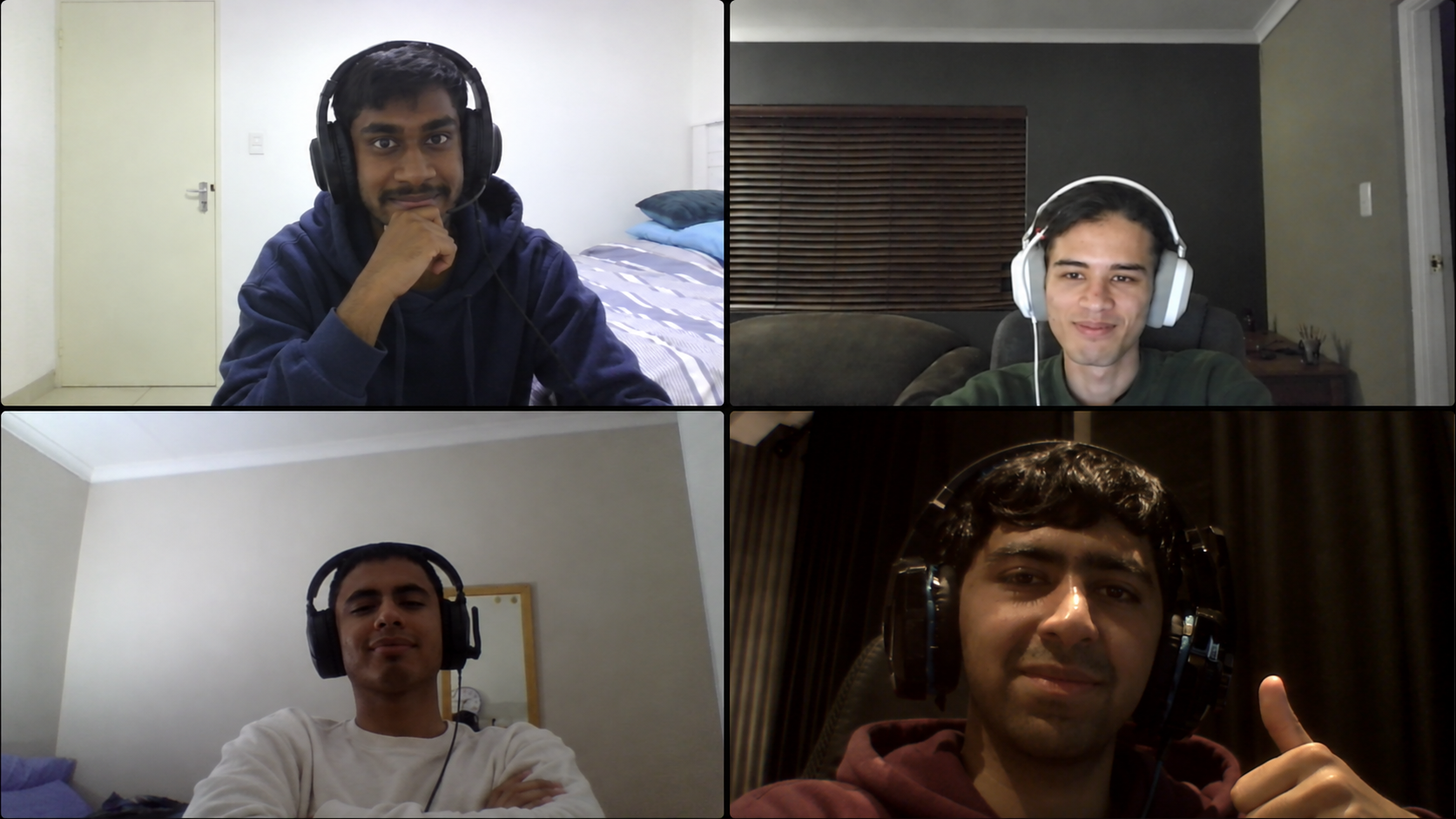
Photo placement follows the supplied order for presentation; its meeting date and association with this record are unconfirmed. See the photo provenance and layout.
Summary of Progress
Progress by stream
- Product/Web (Kevin, coordination role): backend and persistence slices in this window are integration inputs; no individual UI ownership is inferred.
- API/security (Tyron, coordination role): PR #295 integrates ranked matchmaking and #299 territory runtime. Earlier trust/placement services (#293-#294) are inputs; trade APIs (#301) follow on 23 September.
- Data/cross-stack (Uzair, coordination role): PRs #298-#300 cover territory persistence/runtime and versioned trade persistence.
- Quality/content/delivery (Caleb, coordination role): PRs #296-#297 address author-console coverage stability and mount-time UI state reset races; this is code-history evidence, not a test execution report for this snapshot.
Blockers and Open Questions
- No dated ceremony or attendance evidence was provided.
- A merged service does not verify its production configuration or end-to-end behaviour under concurrent clients.
- The stakeholder interaction record leaves demonstration evidence as a follow-up; no acceptance outcome is claimed here.
Actions Taken
The 21 September battle-performance review record is explicitly a planned interaction. It documents CPU responsiveness and live-update topics, and checks implementation against merged PRs #285 and #327. It does not establish that a demonstration or stakeholder assessment happened.
Service/UI integration should preserve atomic trade exchanges, versioned territory state, authenticated actors, and public-data boundaries. Use the contract and persistence documents linked by each PR as technical context.
Next Actions
- Integrate client views against final response contracts and exercise conflict, retry, and recovery states.
- Record environment, revision, and measured outcomes for any performance demonstration; distinguish database benchmarks from user-visible latency.
- Retain independent PR and automated-check evidence for each capability.
Sources
- Reporting window: 20-22 September 2026
- Evidence: Merge history against
mainatc0fd42b; stakeholder interaction plans dated 21 September
Daily Scrum 3 — 23–25 September 2026 reporting window
Date: 23–25 September 2026 reporting window.
Meeting photo
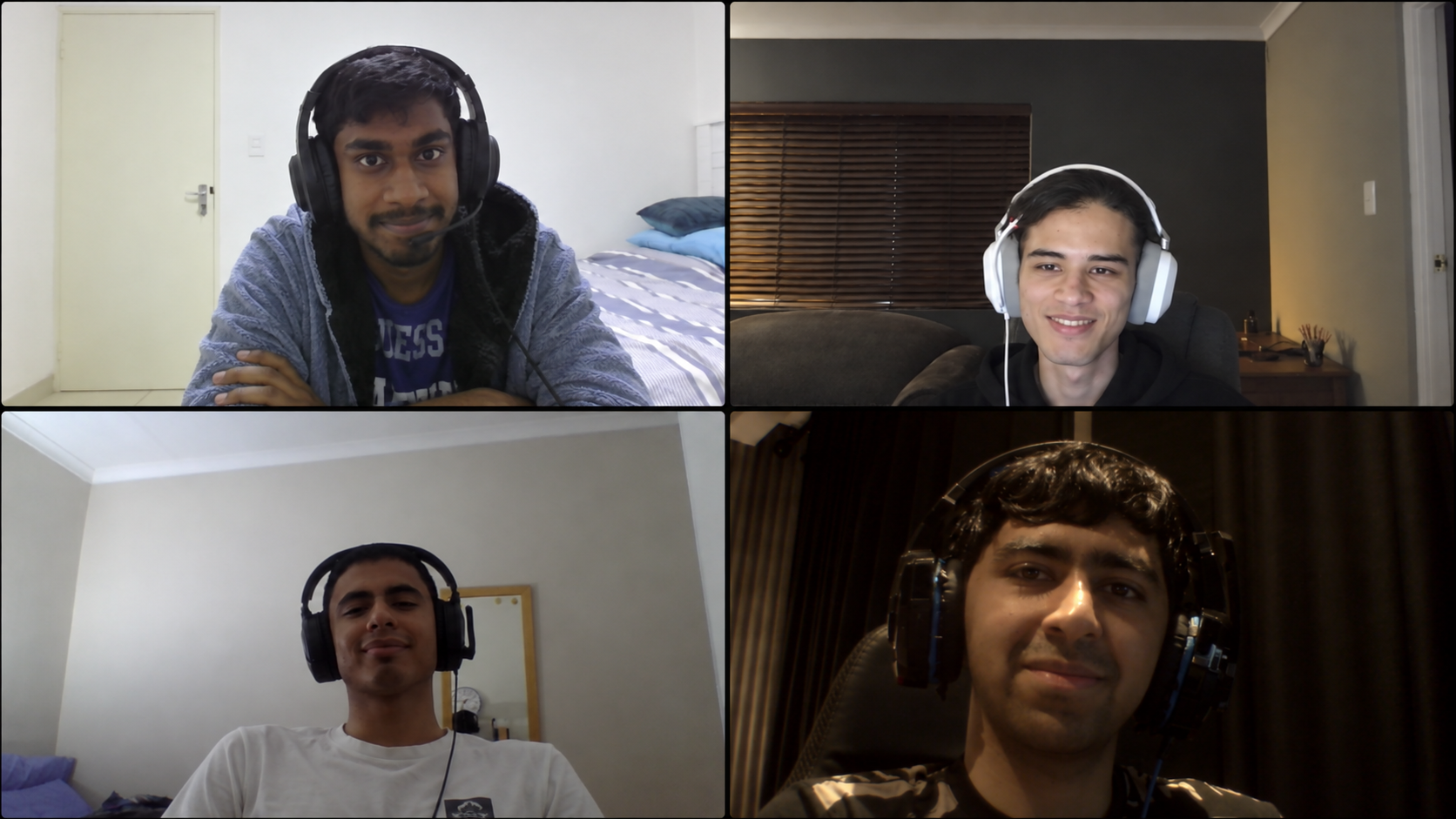
Photo placement follows the supplied order for presentation; its meeting date and association with this record are unconfirmed. See the photo provenance and layout.
Summary of Progress
Progress by stream
- Product/Web (Kevin, coordination role): PR #303 integrates the analytics console and #306 accessibility/preferences. Player journey polish (#307) precedes the broader battle and competitive UI integrations in the next window.
- API/security (Tyron, coordination role): PR #301 implements secure trade APIs, #302 analytics APIs, and #304 the external developer API.
- Data/cross-stack (Uzair, coordination role): the window's topic grouping includes analytics integration, public API boundaries, and follow-up checks for territory and trade state; no merge is assigned to a person.
- Quality/content/delivery (Caleb, coordination role): PR #311 restores deployment recovery/CI scheduling, and #313 fixes evolution availability with trade reservations. Author package/placement PRs #315 and #317 follow in the next window.
Blockers and Open Questions
- The supplied records do not confirm that either planned stakeholder interaction took place.
- Feedback collected on 28 September was not yet evidence of a post-change retest; see the results report.
- Deployment, manual review, and release acceptance remain separate from merged PR status.
Actions Taken
The 23 September account-deletion review record is a planned interaction. PR #329 merged on 28 September and implements account purge behaviour; the implementation merge is not evidence of the planned demonstration, production deployment, or stakeholder acceptance.
The 25 September territories and rate-limits record is also planned. It explicitly states that randomized territories and Upstash-backed shared limits are not implemented. Existing fixed territory geometry and process-local developer API limits must not be described as those proposed features.
Next Actions
- Validate account deletion and fresh registration using a dedicated test account, recording environment and safe evidence.
- Keep territory randomization and shared rate limiting in follow-up scope until implementation and multi-instance verification are recorded.
- Triage feedback into reproducible tasks without declaring related PRs fixes.
Sources
- Reporting window: 23-25 September 2026
- Evidence: Merged PR history; planned stakeholder records dated 23 and 25 September
Daily Scrum 4 — 26–28 September 2026 reporting window
Date: 26–28 September 2026 reporting window.
Meeting photo
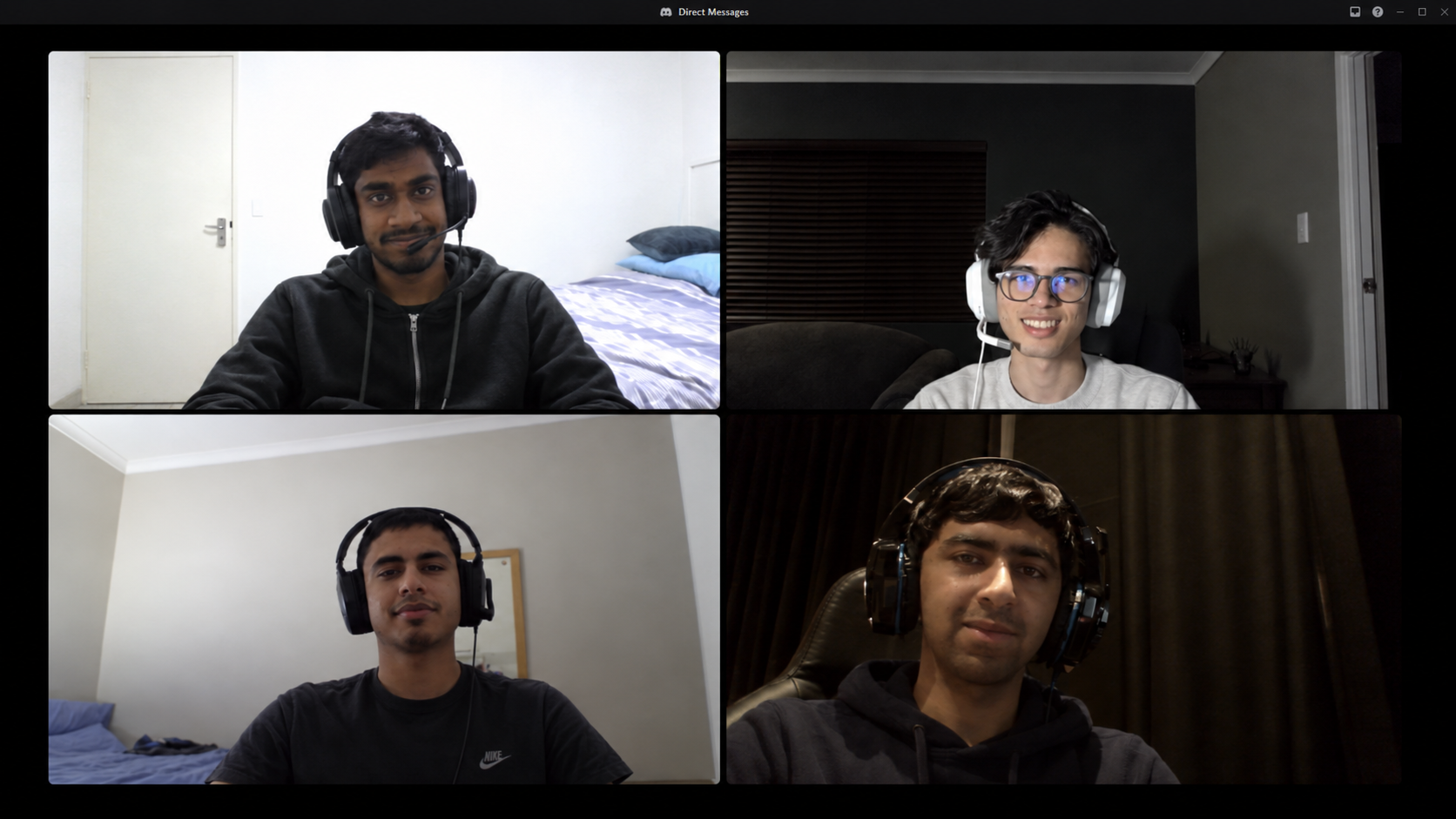
Photo placement follows the supplied order for presentation; its meeting date and association with this record are unconfirmed. See the photo provenance and layout.
Summary of Progress
Progress by stream
- Product/Web (Kevin, coordination role): PR #318 unifies battle presentation, #321 adds ranked-season UI, #324 card trading UI, #325 decks and leaderboard, and #328 responsive/player-battle polish.
- API/security (Tyron, coordination role): PR #320 exposes trust review/audit APIs; #326 adds its console/runtime work; #329 implements account-data purge.
- Data/cross-stack (Uzair, coordination role): the PR #329 account lifecycle spans provider coordination and local data cleanup; role context does not identify an individual implementer.
- Quality/content/delivery (Caleb, coordination role): PR #327 improves application/battle performance and #306 accessibility work is in the merge history. Automated or deployed outcomes require their own recorded evidence.
Blockers and Open Questions
- Separate PR checks and local benchmark data from named-deployment results.
- Feedback on action confirmation, recovery, mode/rating clarity, and other themes requires reproduction and issue-level disposition.
- No ceremony occurrence, attendance, or release sign-off is documented.
- Territory randomization and Upstash distributed limits remain unimplemented.
Actions Taken
The Sprint 3 feedback report records 15 submissions on 28 September, including three identical complete answer sets. It identifies six proposed findings. The report records no new accepted issues and no participant retests. Findings are signals for triage, not verified defects or proof that associated UI/performance PRs resolve them.
Next Actions
- Create or link focused feedback issues only after useful reproduction details are captured; retain explicit retest status.
- Run release-like checks against a named revision/environment and publish the exact evidence and known limitations.
- Verify mobile, accessibility, account lifecycle, multiplayer recovery, and rate-limit behavior through the appropriate existing automated policies and recorded manual checks.
Sources
- Reporting window: 26-28 September 2026
- Evidence: Merged PR history through
c0fd42b; feedback report dated 28 September
Backlog Refinement — 16–28 September 2026 evidence window
Date: 16–28 September 2026 evidence window.
Discussion
Review the goal, dependencies, release evidence, and follow-up scope across the sprint. The record below summarises the retained sources.
Completed or Mostly Completed Items
- Policy, persistence, service, and UI slices were merged for the Advanced systems.
- Accessibility, evolution, performance, responsive UI, and account-purge follow-ups were merged.
These items describe repository integration through c0fd42b, not demonstration or acceptance.
Items Needing Refinement
Refinement pass 3: planned stakeholder topics
- The 21 September battle/performance record is explicitly planned. It distinguishes CPU HTTP actions from live PvP WebSocket delivery; PRs #285 and #327 are implementation context, not proof of a demonstration or accepted response time.
- The 23 September account review is planned. PR #329 merged on 28 September; production and stakeholder validation remain follow-up evidence.
- The 25 September territory/rate-limit review is planned. Randomized territory placement and Upstash shared limiting are proposed, not implemented.
Refinement pass 4: user feedback
The feedback report records 15 submissions dated 28 September, with three identical complete answer sets. It identifies six proposed findings; no new issue has been accepted and no retests are recorded. Findings should be reproduced, scoped, and linked to implementation and retest evidence before disposition. Nearby PRs are context only, not assumed fixes.
Backlog Decisions
Refinement pass 1: contract-led capabilities
Policy and contract work was integrated alongside implementation: live PvP (#281), trust (#282), placement (#286), ranked competition (#289), territories (#290), and trading (#292). Corresponding persistence, service, and gateway work appears in #283, #285, #287-#301. The commit sequence shows a delivery pattern; it does not establish each native issue dependency or assignment.
Refinement pass 2: integrated product surfaces
The merge history adds author placement/review workflows (#315, #317), battle presentation (#318), territory (#319), ranked UI (#321), trading (#324), decks/leaderboard (#325), trust review (#320, #326), analytics (#302-#303), and external API support (#304). Accessibility (#306), evolution correction (#313), performance (#327), responsive polish (#328), and account purge (#329) also appear in the window. Scope labels describe merge subjects only; consult the corresponding PR and issue for exact acceptance and status.
Resulting coordination policy
- Use issue acceptance criteria and PR review records as the authority for implementation scope and status; do not derive ownership from role context.
- Keep stakeholder interaction plans distinct from completed interactions.
- Preserve server-authoritative state, persistence integrity, authorization, accessibility, and responsive behaviour as cross-layer review concerns.
- Do not claim randomized territories, Upstash limiting, or release readiness without implementation and corresponding evidence.
- Keep manual/deployed results pending until a revision, environment, method, and outcome are recorded.
Next actions
- Reproduce the six proposed feedback findings and create/accept tracker work only with actionable steps and expected behaviour.
- Confirm any release and stakeholder gate against the live tracker and record evidence separately from merge status.
- Refine territory rotation and distributed quota requirements before implementation; define safety, versioning, failure, and multi-instance tests.
Sources
- Evidence window: 16-28 September 2026
- Sources: PR merge subjects, local policy/docs, planned stakeholder records, feedback report
Sprint Review — 28 September 2026 release-readiness snapshot
Date: 28 September 2026 snapshot.
Implementation Available for Review
- Live PvP contract, persistence, gateway, and battle experience: #281, #283, #285, #318
- Trust rules, persistence, APIs, and review console: #282, #288, #293, #320, #326
- Placement policy, persistence, services, and author workflow: #286, #287, #294, #317
- Ranked policy, persistence, runtime, and UI: #289, #291, #295, #321
- Territory policy, persistence, runtime, and UI: #290, #298, #299, #319
- Trading policy, persistence, APIs, and UI: #292, #300, #301, #324
- Analytics and external API: #302-#304
- Accessibility, author packages, evolution, performance, responsive UI, account purge: #306, #313, #315, #327-#329
Merge subjects do not substitute for PR acceptance, tracker status, deployment, or manual validation.
Accepted Items
No Sprint Review acceptance outcome was supplied. The merged implementation inventory is not release sign-off.
Review Notes
Sprint goal assessment
The repository shows integrated work covering live PvP, trust, placement, ranked competition, territories, trading, analytics, developer API access, accessibility, performance, responsive polish, author tooling, and account purge. This does not show that every criterion passed or the release is validated.
Stakeholder and user evidence
The three stakeholder pages dated 21, 23, and 25 September are explicitly planned. Their implementation context includes #285/#327, #329, and existing territory/developer API behavior. No occurrence or acceptance is claimed.
The Sprint 3 feedback report records 15 submissions on 28 September, including three identical full answer sets, and six proposed findings. It records no newly accepted issues or retests. This sample informs triage, not feature acceptance or a confirmed defect rate.
Quality, scope, and release readiness
- No named deployment, signed-in smoke results, stakeholder demonstration, or manual release record was supplied; release evidence remains pending.
- Randomized territory placement and Upstash-backed shared rate limits are not implemented. Fixed territory geometry and process-local API limits are the current documented boundaries.
- Do not claim a “closed gate” or infer issue state from merged PRs.
Review conclusion
As of 28 September, merge history demonstrates broad implementation activity. The available record is insufficient to declare Sprint 3 release-ready or to claim stakeholder acceptance. Those conclusions require explicit evidence.
Follow-up Items
- Reconcile the live tracker and PR criteria against this inventory.
- Record checks with revision, environment, steps, results, and limitations.
- Triage findings and link implementation plus focused retest before calling them resolved.
- Keep randomization and shared limits out of delivered scope until verified.
Sources
- Implementation evidence: First-parent merge history and local docs through 28 September
- Release evidence: Pending until named revision/environment results are recorded
Sprint Retrospective — recommendations from the 28 September snapshot
Date: 28 September 2026 evidence snapshot.
What Went Well
- The merge history shows policy/contract, persistence, service, and UI slices across live PvP, trust, placement, ranked, territories, and trading.
- Follow-up work also appears for accessibility, author workflows, evolution, performance, responsive presentation, and account purge.
- The stakeholder documents distinguish current implementation from proposals; notably they do not present territory randomization or Upstash limiting as delivered.
- The feedback report preserves response limitations, including duplicate answer sets and missing retest evidence.
These are properties of the available artifacts, not attributed statements from team members or meeting participants.
What Did Not Go Well
- Ceremony notes, dates, attendance, and decisions were not supplied, so retrospective claims and team consensus cannot be verified.
- Planned stakeholder interactions need occurrence and outcome recorded separately from implementation research.
- Feedback arrived as a 28 September snapshot; actionable reproduction, accepted issue links, and retests are still absent.
- Merge volume is visible, but named-environment release checks and acceptance evidence are not captured in this record.
- Keep future work on randomized territory placement and distributed limits clearly separated from existing fixed geometry and process-local quotas.
Lessons Learned
These lessons are recommendations from the artifact review, not recorded team agreement.
- Separate implementation, deployment, stakeholder assessment, and participant retests.
- Capture actionable feedback early enough to reproduce and retest it.
- Confirm proposed features and cross-layer contracts before scheduling implementation.
Recommended Action Items for the Next Sprint
- Record ceremonies contemporaneously — Coordination owner: Sprint coordination role; Evidence to collect: Date, actual attendees, concise decisions, impediments, and linked work
- Triage feedback early enough to retest — Coordination owner: Product and quality coordination roles; Evidence to collect: Reproduction steps, accepted issue, implementation link, named retest result
- Make release evidence traceable — Coordination owner: Quality/delivery coordination role with stream owners; Evidence to collect: Revision, environment, automated checks, manual outcomes, limitations
- Coordinate contracts through integration — Coordination owner: Frontend, backend, and data coordination roles; Evidence to collect: Reviewed schemas, migration compatibility, client state, and recovery checks
- Refine proposed cross-cutting features before scheduling — Coordination owner: Product, backend, data, and quality roles; Evidence to collect: Agreed requirements, owner in tracker, issue links, safety and failure tests
Role labels are coordination context only; they do not identify who attended, accepted an action, or owns a live issue.
Follow-up
Measures for the next review
- Accepted feedback findings with linked implementation and retest evidence.
- Release checks tied to a named revision and deployment environment.
- Percentage of planned stakeholder records updated with occurrence status and actual outcomes.
- Territory and rate-limit scope accurately labeled as proposed, active, or delivered in tracker and documentation.
Recommended conclusion
The evidence supports continued work on earlier feedback triage, contemporaneous process records, and explicit release validation. These are recommendations from artifact review; no team agreement is implied.
Sources
- Inputs: Merge history, three planned stakeholder records, Sprint 3 feedback report
- Overall signal: Broad implementation integration; release and feedback validation evidence remains incomplete
Photos and Sources
Five Sprint 3 team-call photos supplied by Uzair are retained in the photo index. Their dates and mapping to planning and the four written checkpoints are unconfirmed. Photos are placed in supplied order for presentation, without assigning ceremony dates. Earlier-sprint photos are not reused.
The records above retain merge references, coordination-role limits, and original AI declarations. See the feedback results, validation status, and stakeholder interaction plans. All status statements preserve the 28 September evidence boundary.
AI declaration
The original ceremony narratives used repository history, project documentation, and the supplied vitaqsprint.pdf layout reference with assistance from Codex-CLI[gpt-6-luna], Codex-CLI[gpt-6-sol], Codex[GPT-6].
Report consolidation and simplification assisted by Codex[GPT-6]. Repeated agendas, workflow instructions, and source notices were removed; historical dates, photo provenance, and evidence limits are unchanged. No meeting, attendance, quotation, acceptance, or test result is inferred from this edit.